Humanoid platform comparison
| Specification |
Unitree R1 EDU U2
Unitree
|
Unitree G1 EDU Plus U2
Unitree
|
Unitree H2 EDU (+ Orin NX)
Unitree
|
AgiBot X2 Ultra (new version)
AgiBot (Zhiyuan Robotics)
|
Booster T2 Pro
Booster Robotics
|
|---|---|---|---|---|---|
| Photo | 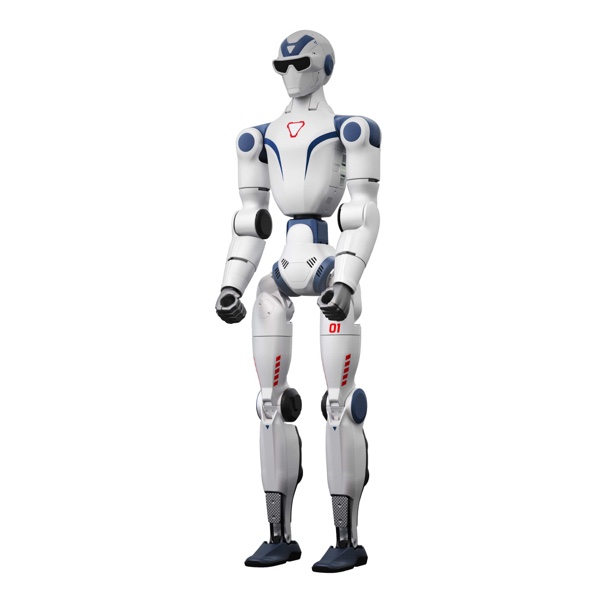 | 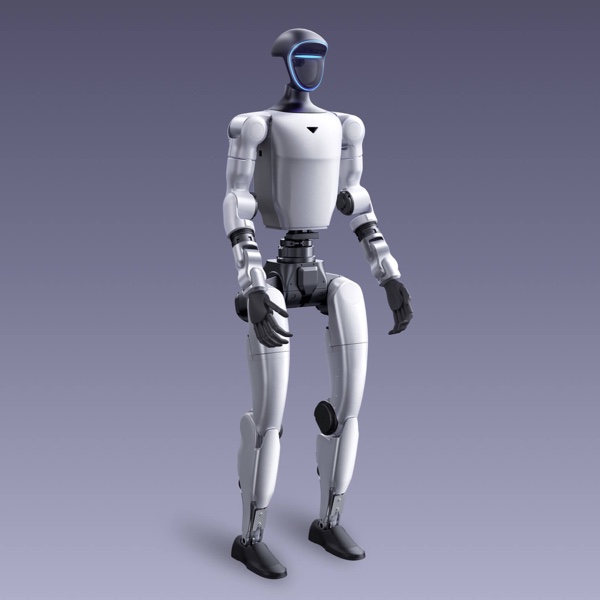 | 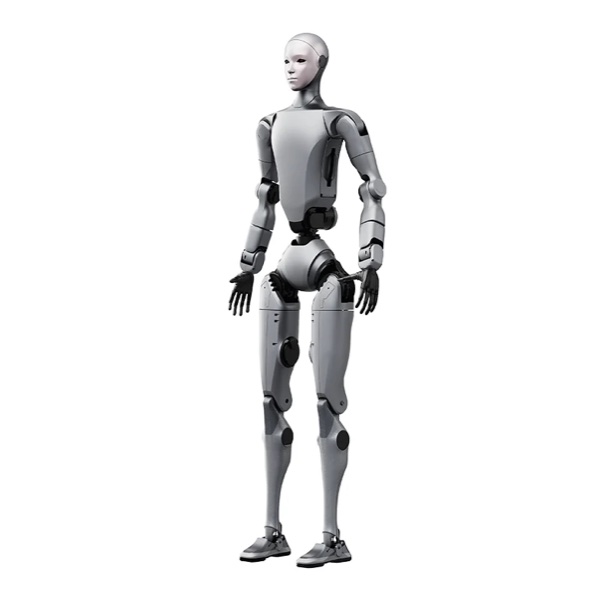 | 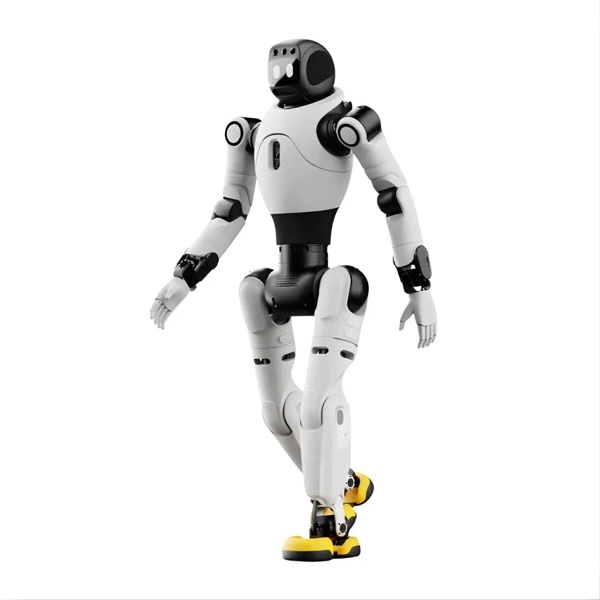 | 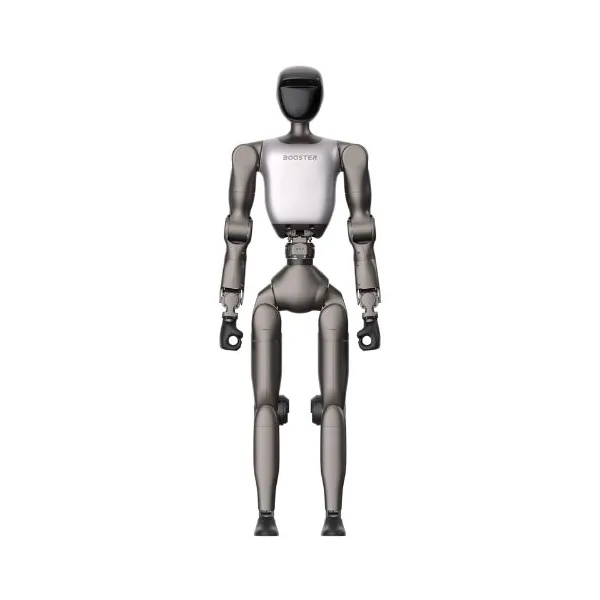 |
| Height | 1.21 m | 1.32 m | 1.82 m | 1.31 m | 1.40 m |
| Weight | ~25 kg | ~35 kg | ~70 kg | ~39 kg | ~42 kg |
| Total DoF | 26 (12 legs · 10 arms · 2 waist · 2 head) | 29 (12 legs · 3 waist · 14 arms · 0 head) | 31 (12 legs · 3 waist · 14 arms · 2 head) | 31 (12 legs · 3 waist · 14 arms · 2 head — pitch axis added vs. the original X2 Ultra's 1 head DoF) | 31 (12 legs · 3 waist · 14 arms · 2 head) |
| Cameras | Binocular depth module · RGB 1280 × 1080 @ 30 Hz · depth 544 × 448 @ 10 Hz · global exposure · dynamic range 66 dB, >100 dB in HDR mode · high sensitivity with 850/940 nm NIR enhancement | 1 × Intel RealSense D435i (active depth) | Binocular head camera, 2 × RGB global shutter, 2064 × 1552 (3.2 MP), 30 fps, 12-bit RAW, F2.0, 1.53 mm, 60 mm baseline, DoF 0.15 m–∞ · no rear view | 4 × RGB: binocular forward · interactive upward (SenYun SM5M12NJ, up to 2608 × 1960) · RGB-D downward · rear | Head + waist stereo (RGB + depth, global shutter, 544 × 488, 0.27 MP) · wrist camera (12 MP RGB, close-range, gripper/dex-hand configs only) · no rear view |
| Camera FOV | 146° H × 124° V | 55.2° V, angled downward | 156° H × 116° V | Binocular 156° × 120° · interactive 110° × 80° · RGB-D 86° × 55° · rear 120° × 156° | 105° H × 94° V (head/waist, color and depth) · 120° (wrist) |
| LiDAR | ✕ | Livox MID-360, 360° H × 59° V | ✕ · optional LiDAR package, ~$3,450 | 3D LiDAR, 90° H × 120° V (forward-facing, not 360°) | ✕ · optional Super-hemispherical 3D LiDAR, €2,765 |
| Display | ✕ | ✕ | ✕ · RGB light strip, 256 colours (brand surface, not a display) | Interactive screen + lighting effects, controllable via PlayEmoji (26 expressions) and PlayVideo — identical on both X2 Ultra variants | ✕ |
| Audio | 4-mic spatial array + built-in speaker | 4-mic array + 5W speaker | 4-mic MEMS array (30 mm spacing, quasi-linear) + 8Ω 10 W speaker (peak 12 W) — mounted at 1.82 m, above crowd head height | Mic array + wireless mic + speaker · touch sensor on the head | Mic array + speaker · Hi Chat: real-time voice interaction · DUTCH LANGUAGE UNCONFIRMED |
| Extra compute | NVIDIA Jetson Orin, 100 TOPS · UnifoLM multimodal model on board | Jetson Orin NX, ~100 TOPS | PC2 Intel Core i7 (development) · PC4 optional Jetson Orin NX 16 GB, 100 TOPS · PC3 optional Jetson Thor T5000, 2,070 TFLOPS | PC2 dev-unit: Jetson Orin NX 16 GB, 157 TOPS, 1024-core Ampere GPU, 512 GB · PC1/PC3: 2 × RK3588 | Jetson Thor T5000 · 14-core Arm Neoverse-V3AE @ 2.6 GHz · 2,070 TFLOPS (FP4, sparse) · 128 GB RAM · 512 GB |
| Toolchain | Unitree SDK2 · ROS 2 (rosbag2, MoveIt2) · NVIDIA Isaac Sim · CUDA/TensorRT | CUDA · TensorRT · JetPack · unitree_sdk2 · 785 third-party repos | unitree_sdk2 (C++) · unitree_sdk2_python · unitree_ros2 · CycloneDDS over Gigabit Ethernet · CUDA/TensorRT with a Jetson module | AimDK_X2 · ROS 2 Humble · Python + C++ · custom aimdk_msgs · CUDA/TensorRT · 37 third-party repos incl. official URDF and MoveIt2/navigation packages | CUDA · TensorRT · JetPack · ROS 2 native · open SDK Python + C++ · Booster Studio |
| Runtime per pack | ~1 h | 2 h | ~3 h (15 Ah / 0.972 kWh, 75.6 V) · quick-release battery | ~2 h (421 Wh) · hot-swap battery, robot keeps running during a swap · ≤1.5h recharge | ~2 h · charges while in use |